Oana Grigore
Bucharest, Romania
Senior Product Designer for B2B SaaS & enterpriseSix user roles, three compliance rules and a design system held together with hope? That’s my favourite kind of brief.
In healthcare transportation, bad UX means someone doesn't get to their appointment. That's why I design accessibility in from the start, across portals, apps and the systems that hold them together.
What I do
- Accessibility
- WCAG 2.1 AA designed in from the first flow, not patched in before launch.
- Design systems
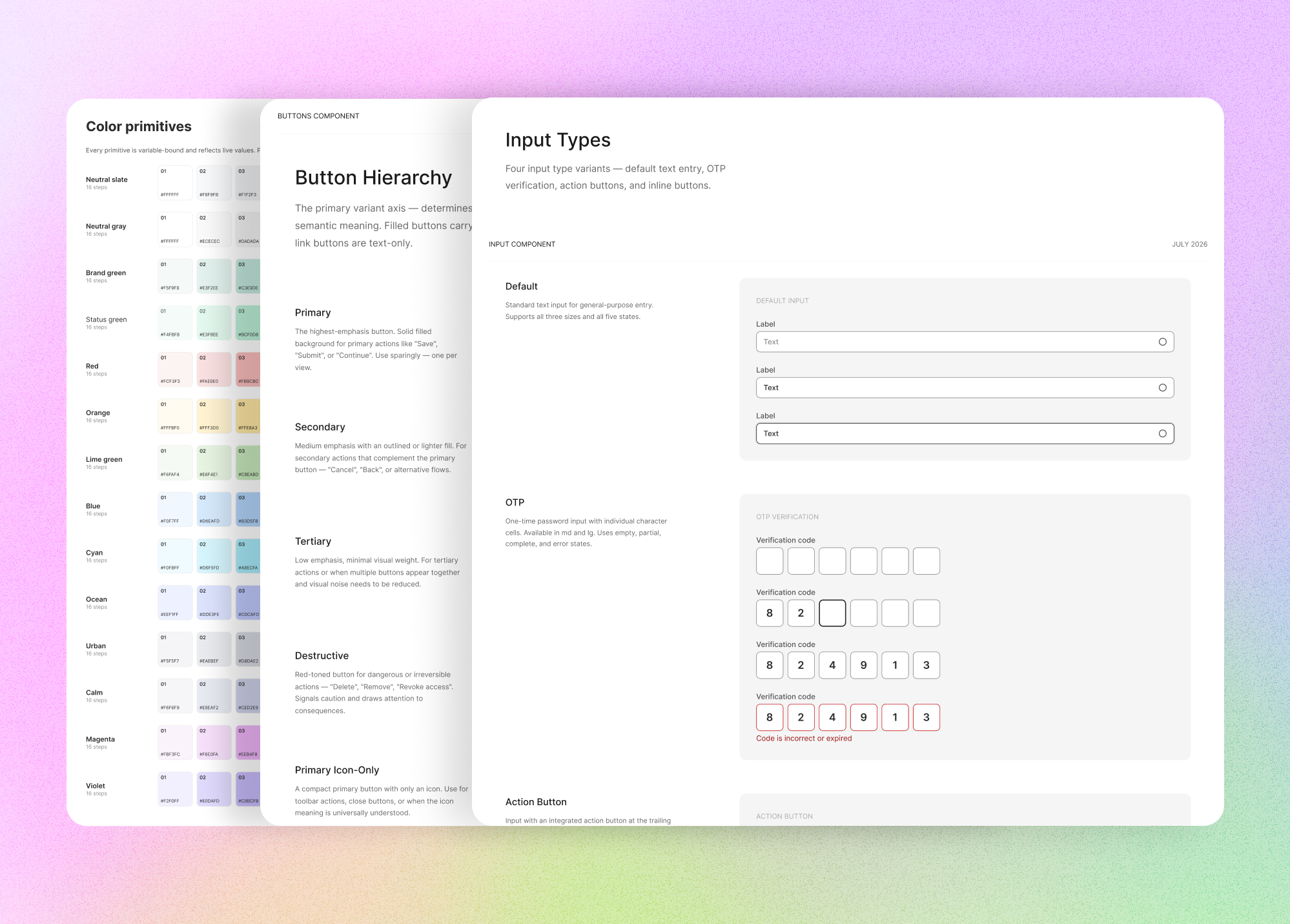
- Token-based systems with written rules, so developers don’t have to guess.
- Complex products
- B2B SaaS and enterprise platforms with many user roles and compliance requirements.
- Millionsof members use the MediDrive platforms I designed, one of 5 transportation brands I led
- WCAG 2.1 AAthe accessibility baseline to design MediDrive's member app and portal
- 40+ Shopify appsscaled for 30,000+ merchants
- 4.9 / 5Vitals’ Shopify App Store rating across 2,800+ merchant reviews
01Selected work
All 8 projects →Selected work
02Before & after
Every confusing screen is a missed ride.
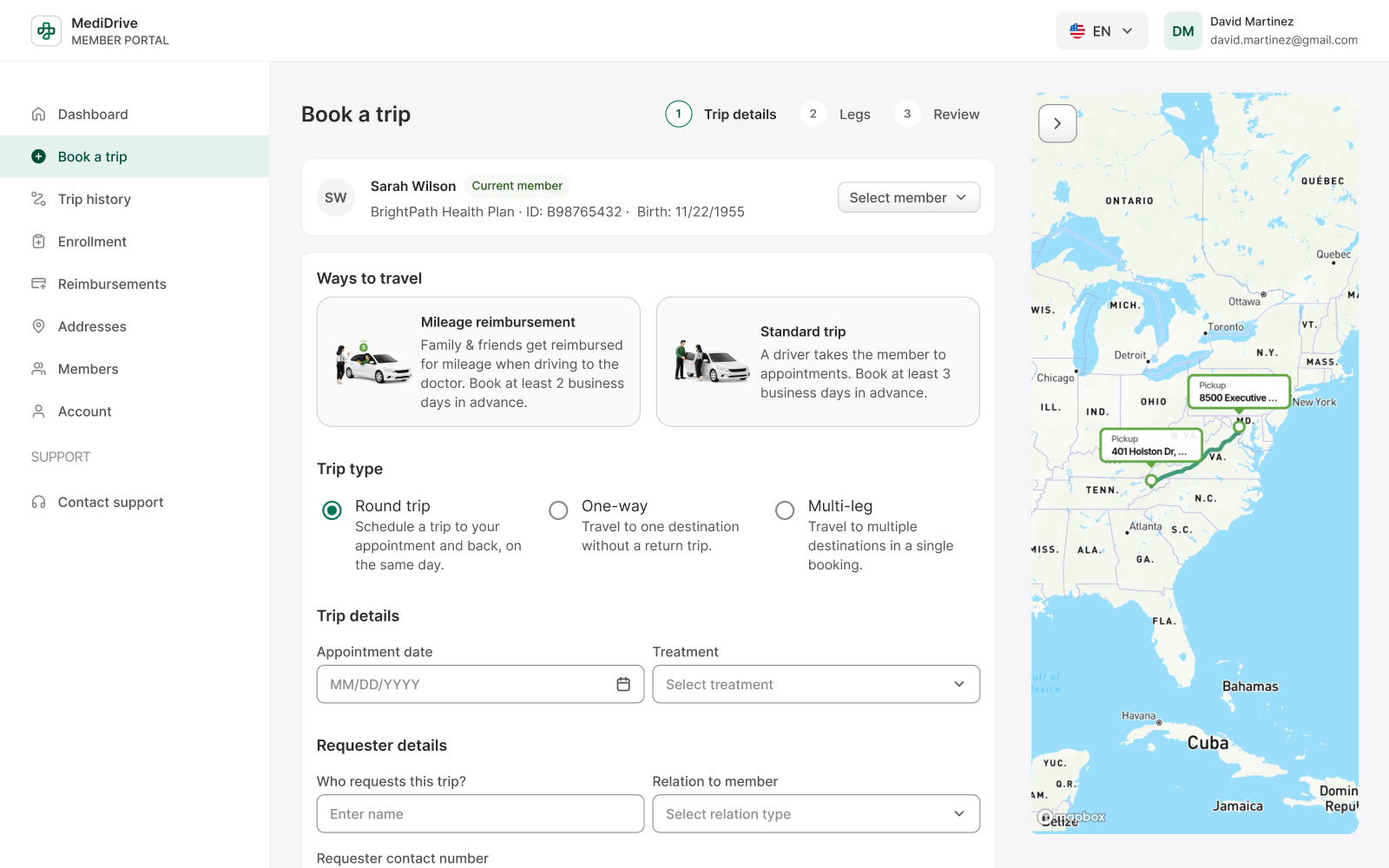 AFTER
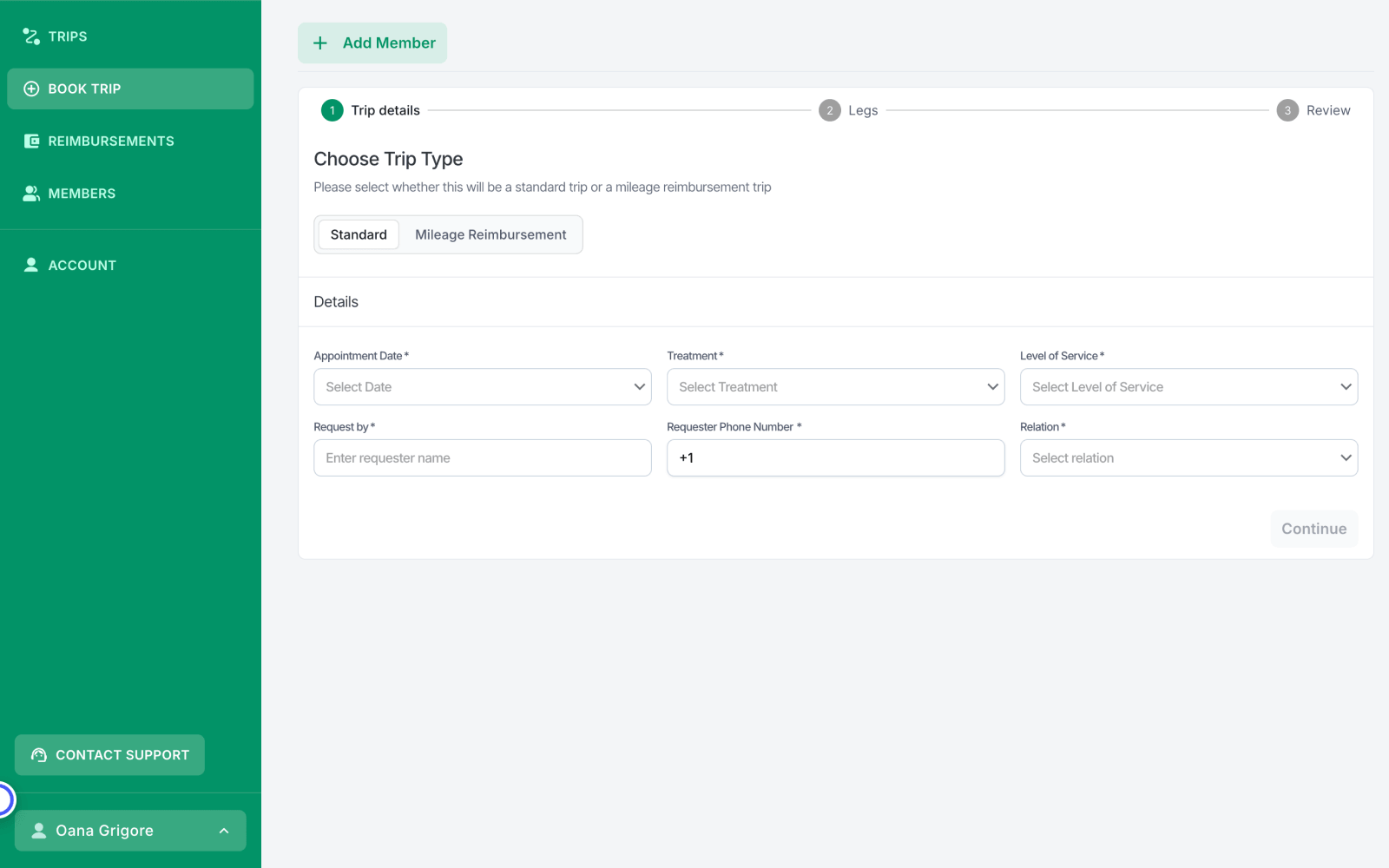 BEFORE
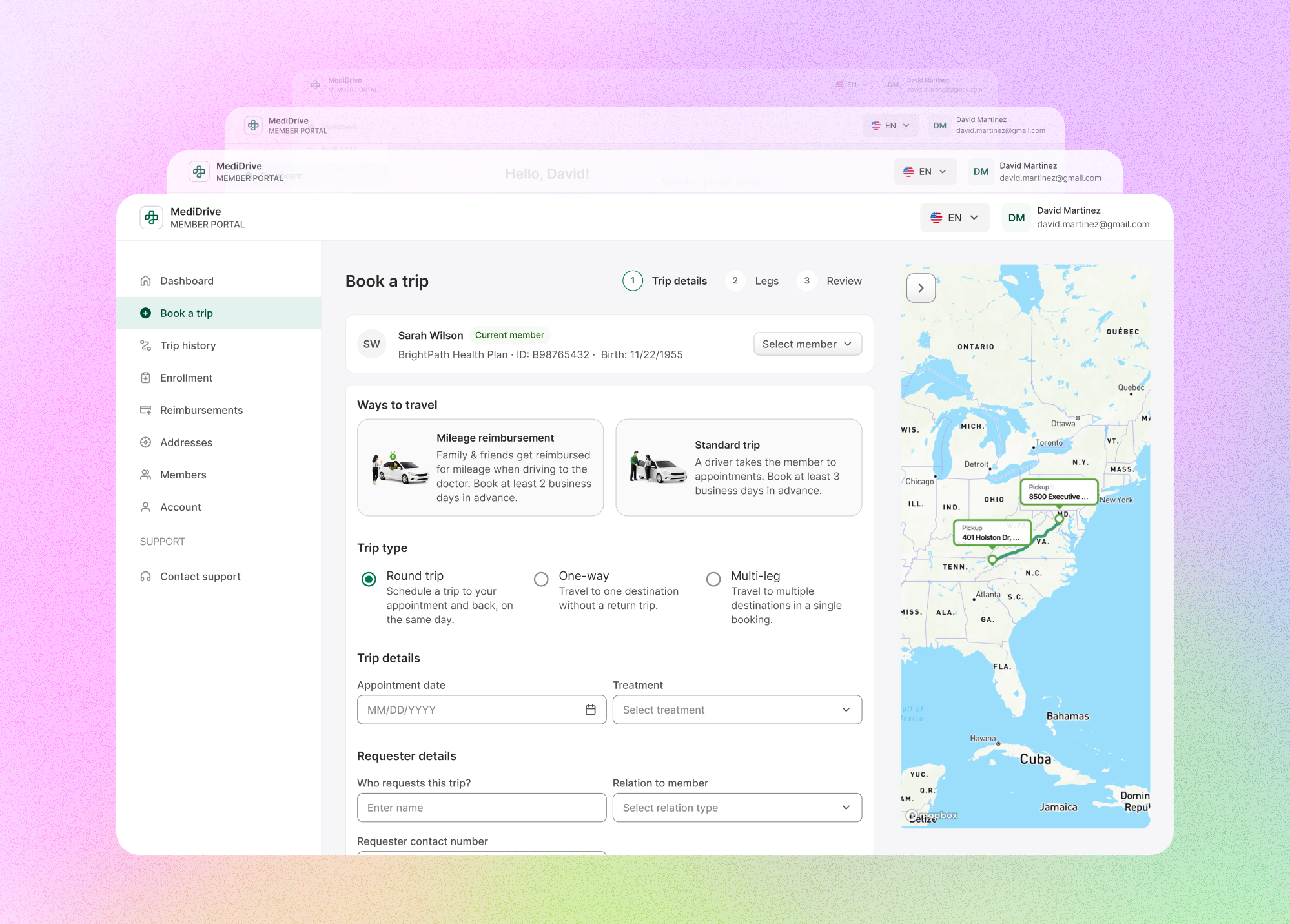
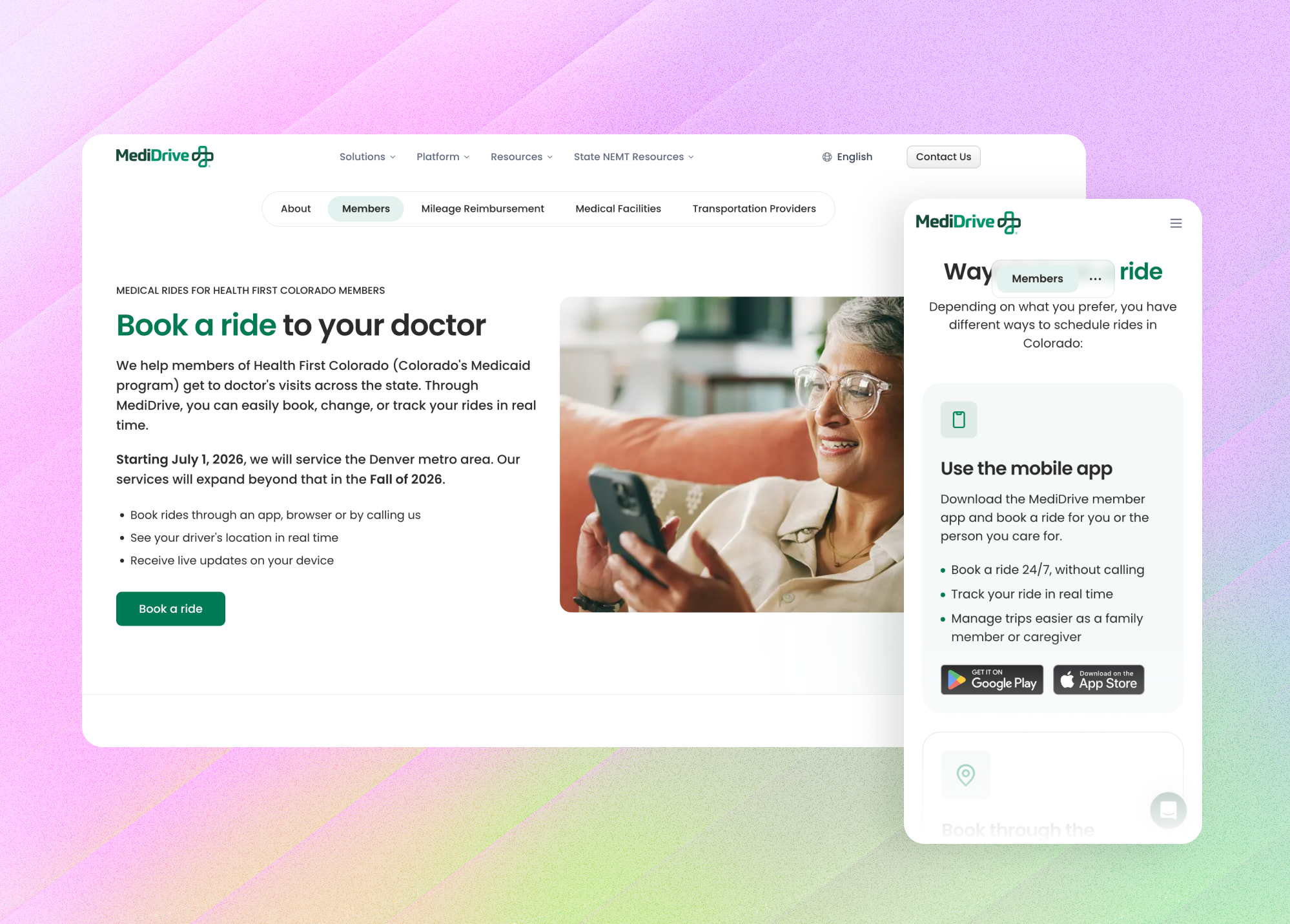
Designing a ride booking portal every Medicaid member can use
Redesigned the complex legacy member portal to adhere to WCAG 2.1 AA standards, simplifying patient onboarding and drive scheduling.
Read the case study03How I work with AI
Context first. Variants second.
I work with Claude from research through discovery and ideation. The prompt is the easy part. The setup is what makes it work: once the context is right, good variants come fast.
See it in practice: the MediDrive design system as a Claude skill01 · Discovery
Set up the fundamentals
Before any screens, I give Claude the context: the brand, the product, its users and the constraints I’m working within.
Claude02 · Discovery
Research the field
Competitors, what they get right and wrong, and the key differentiators worth building on.
Claude03 · Discovery
Frame the problem
What we actually need to solve, and the best approach to it, before anything gets designed.
Claude04 · Ideation
Generate variants
With everything set up, I explore several directions side by side instead of committing to the first one.
Claude05 · Delivery
Fine-tune in Figma
When a design needs craft rather than more options, it moves into Figma.
Figma06 · Delivery
Feed it back to the team
New rules and guidelines go into the Figma file and a shared artifact, so the whole team designs from the same source.
Figma + artifact
After step 6, the process starts again: new rules feed the next brief.
04What I do
What I do
- 01Product Strategy & Architecture
- 02Design Systems & Governance
- 03WCAG compliant systems
- 04Conversion & Flow Optimization